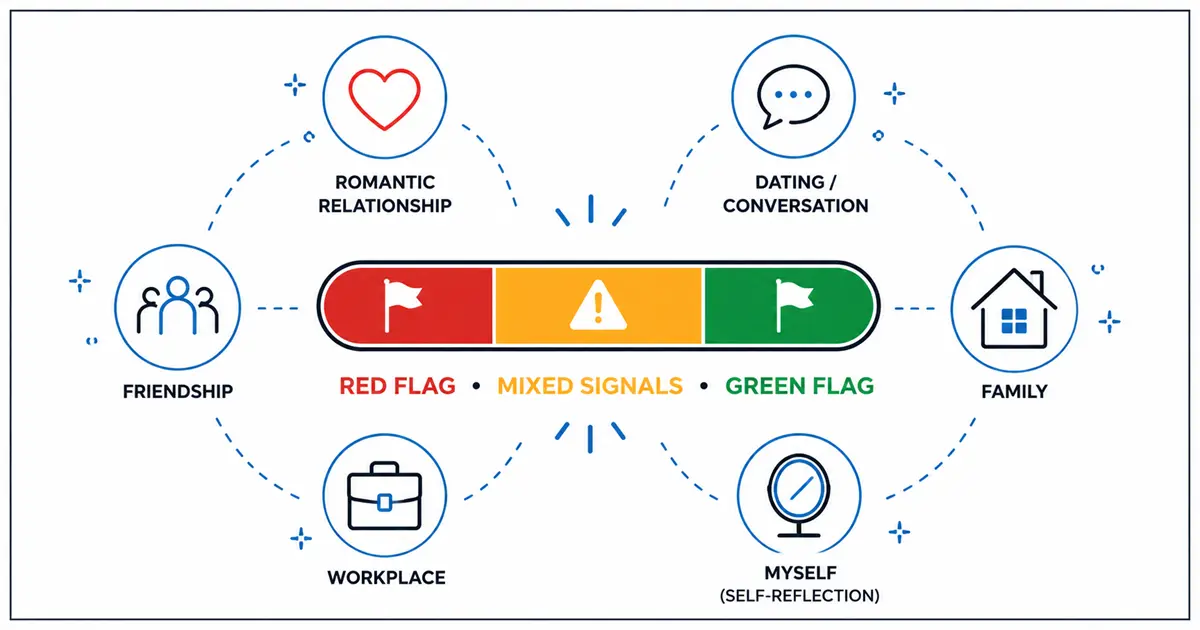
What Is a Red Flag in a Relationship?
In relationships, a red flag is an observable behavior or recurring pattern that signals potential emotional unsafety, boundary violations, control, or manipulation. Red flags are not temporary bad moods or minor misunderstandings; they represent deeper inconsistencies between what a person says and how they consistently treat you.
What Is a Green Flag?
A green flag is a healthy behavioral indicator reflecting emotional maturity, consideration, and active care. Common green flags include honoring stated personal limits without pushback, communicating directly without passive aggression, showing dependable follow-through, and celebrating each other's individual growth and friendships.
Red Flags (Warning Signs)
- Pressuring or ignoring stated boundaries
- Prolonged silent treatment to punish
- Deflecting blame and avoiding accountability
- Deceptive communication or hidden details
- Attempting to isolate from friends and family
- Emotional volatility or explosive anger
Green Flags (Healthy Patterns)
- Respecting boundaries without pushback
- Direct, constructive communication during disagreements
- Consistent words matching follow-through
- Transparent, dependable day-to-day actions
- Encouraging independent friendships and hobbies
- Emotional composure and psychological safety
Red Flags vs Normal Relationship Problems
Every long-term relationship, friendship, or professional connection experiences disagreements, awkward moments, and differing preferences. Understanding the difference between normal relationship imperfections and red flags helps avoid unnecessary alarm while protecting your wellbeing:
Needing time to cool down after an argument, having different communication styles, navigating schedule conflicts, or needing to renegotiate shared responsibilities.
Prolonged silent treatment used to punish, shifting blame for all mistakes, gaslighting, extreme jealousy, non-consensual surveillance, or demanding that you cut ties with loved ones.
What This Red Flag and Green Flag Test Measures
This assessment evaluates six core pillars of interpersonal health:
How personal limits, comfort levels, and basic dignity are honored during disagreements.
Clarity of intentions, active listening, and constructive conflict resolution rather than stonewalling or deflecting.
Dependability, consistency over time, transparency, and honoring confidential moments.
Balanced initiation, shared emotional investment, and mutual appreciation.
Feeling calm and secure rather than walking on eggshells or facing humiliation and angry outbursts.
Freedom to maintain your own hobbies, friendships, career choices, and personal autonomy.
How the Relationship Score Is Calculated
The assessment consists of 24 focused questions tailored to your selected relationship context (4 questions per dimension). Positive items contribute directly to the score, while negative behaviors are automatically reverse-scored so that healthier dynamics produce higher scores (0–100 scale). Each dimension score is averaged independently before contributing equally to your overall relationship score.
Critical safety behaviors—such as intimidation, threats, or deliberate isolation—are monitored separately so they never get obscured inside a mathematical average.
How to Read Your Relationship Flag Result
Understanding what each score range represents helps you interpret your result with clarity and nuance:
Healthy patterns appear consistently across most of the areas measured.
Your answers suggest generally positive patterns, with some areas that may still be worth discussing or reflecting on.
Healthy and concerning patterns both appear across the relationship.
Several areas may deserve closer attention, particularly your lower-scoring dimensions.
Your answers indicate multiple concerning patterns that may be important to reflect on carefully.
The overall score should be read together with your six dimension scores and any serious warning patterns shown separately. It is a reflection tool, not a diagnosis or a verdict on whether a relationship should continue.
Red and Green Flags Can Look Different in Different Relationships
Healthy and concerning patterns can show up differently depending on the kind of relationship you are thinking about.
Romantic Relationship
Dating / Situationship
Friendship
Family
Workplace
Myself
What to Do After Taking the Test
Look for patterns, not one imperfect moment
One argument, awkward conversation or difficult week does not necessarily define an entire relationship. Look at the patterns reflected across several answers.
Check your lowest-scoring dimension
Your lowest dimension may reveal more than the overall score. Communication, trust, boundaries or another area may be where reflection is most useful.
Pay attention to serious warning patterns separately
Some behaviours are shown separately from the overall score because they may deserve attention even when other areas of the relationship appear healthy.
Important Limitations
This test is a structured self-reflection tool created to help you organize observations and reflect on interpersonal patterns. It is not a medical, psychological, or clinical diagnostic instrument. It cannot evaluate a person's character in full or provide legal advice. If you are in an unsafe situation or facing abuse, please connect with trusted local support organizations or professional counselors.
Frequently Asked Questions
How accurate is the Red Flag or Green Flag Test?
This test is a structured self-reflection tool designed to help you recognize observable behaviors and communication patterns. It uses evidence-informed relationship wellness concepts, but it is not a psychological or clinical diagnostic evaluation.
Can I use this test for early dating or a situationship?
Yes. The Dating / Situationship category is specifically calibrated for early-stage dating dynamics, focusing on clarity, pacing, consistency, mixed signals, and boundary respect without assuming long-term cohabitation or marriage.
Can I use this test for friendships?
Yes. Select Friendship at the start of the test to receive questions focused on trust, boundaries, mutual support, reliability, social pressure and other friendship dynamics.
Can I use this test to check myself?
Yes. Select Myself to reflect on your own communication, accountability, boundary respect, emotional reactions and controlling habits. The result is intended for self-reflection rather than diagnosis.
Are my assessment answers saved or tracked?
Your assessment answers are processed in your browser and are not saved or sent to Toolsyte's server. Your responses exist only in your browser's temporary memory and are cleared when you retake the test or close the tab.
What is the difference between a mixed signal and a red flag?
A mixed signal involves inconsistent communication, hesitation, or ambiguous intentions that may be resolved through open discussion. A red flag is a persistent behavior that violates boundaries, exhibits control, or compromises emotional safety.
What should I do if my result shows critical warning signs?
Critical warning signs represent behaviors like intimidation, deliberate isolation, coercion, or humiliation. If you feel unsafe or are experiencing abuse, consider reaching out to trusted friends, family, professional counselors, or confidential support resources.