What Is Christmas and Why Is It Celebrated?
Christmas is celebrated around the world every year on December 25. At its heart, the holiday commemorates the birth of Jesus Christ, who Christians regard as the Son of God and spiritual savior. Over more than two millennia, Christmas has grown from an ancient religious observance into one of the most widely recognized cultural celebrations on earth, embraced by billions of people across diverse backgrounds, faiths, and continents.
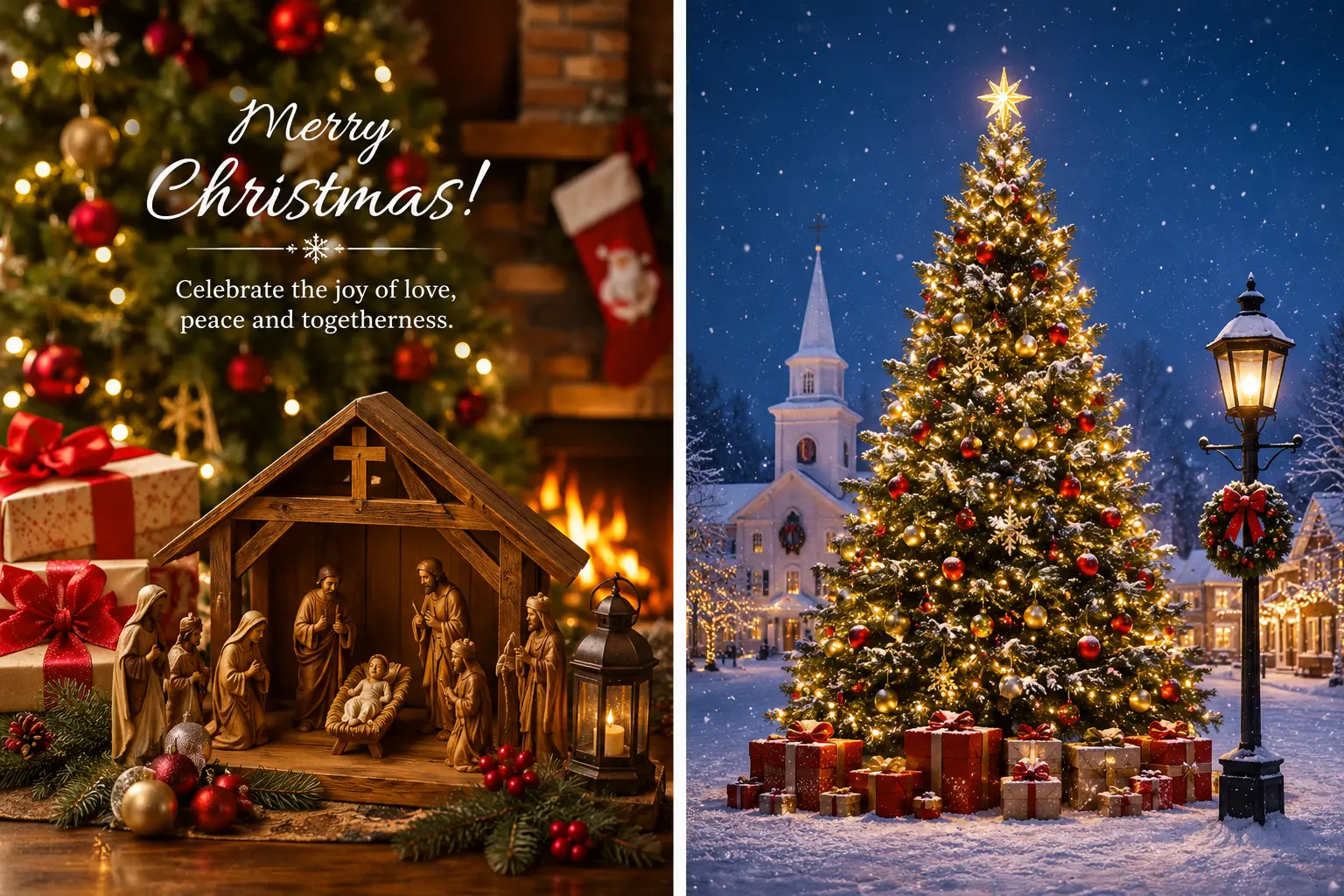
In Christian theology, Christmas represents hope, goodwill, and the message of peace on earth. The nativity narrative recounts the humble birth of Jesus in Bethlehem, an event celebrated with church services, nativity displays, candlelight vigils, and sacred carols. For practicing Christians, the weeks leading up to Christmas—known in Western churches as the season of Advent—serve as a time of spiritual reflection, prayer, and joyful anticipation.
Alongside its religious significance, Christmas has developed a rich cultural dimension that centers on family togetherness, generosity, and festive warmth. Communities everywhere welcome the holiday season with decorated evergreen trees, sparkling outdoor lights, wreath-making, seasonal music, gift exchanges, and shared holiday feasts. Whether observed through sacred liturgical rites or cheerful secular customs, Christmas represents a universal opportunity to pause, express gratitude, reconnect with loved ones, and extend compassion to those in need.
Why Is Christmas Celebrated on December 25?
The Bible does not specify the calendar date of Jesus's birth. The earliest surviving record of Christmas being celebrated on December 25 in Rome dates to the fourth century (recorded in a Roman calendar entry for 336 AD), and the date became established in Christian tradition over time.
Historians have long discussed why December 25 became the central date. A prominent view is that it coincided with midwinter observances in the Roman world, such as the winter solstice and festivals like Saturnalia and the feast of Sol Invictus, symbolizing the return of light. Another historical perspective connects the date to theological calculations based on the Annunciation in spring. Over the centuries, December 25 became the standard day of observance across Western Christianity.
Today, the vast majority of Western Christian churches—including Roman Catholic and Protestant denominations—follow the Gregorian calendar and celebrate Christmas on December 25. Many Eastern Orthodox churches, including those in Russia, Serbia, and Egypt, still follow the older Julian calendar, which places December 25 thirteen days later on January 7 in the civil calendar.
Christmas Traditions Around the World
While the core spirit of Christmas is shared globally, individual nations have created distinctive, vibrant traditions that reflect their own cultural heritage and seasonal geography:
Germany: Renowned as the birthplace of many beloved holiday customs, Germany is famous for its festive Christkindlmarkts (Christmas markets) that fill historic town squares with wooden stalls, handcrafted ornaments, wooden nutcrackers, warm spiced Glühwein, and gingerbread Lebkuchen. German families also celebrate Advent with four-candle wreaths and exchange gifts on Christmas Eve (Heiligabend).
Italy: In Italy, nativity scenes (presepi) take center stage over Christmas trees, especially in Naples, where artisans craft intricate miniature street scenes with hundreds of detailed figurines. In many Italian homes, Christmas Eve meals feature seafood, while Italian-American families often celebrate with the traditional Feast of the Seven Fishes. Children look forward to December 25 for gifts from Babbo Natale (Santa Claus), as well as January 6 (Epiphany), when the friendly witch La Befana delivers sweets and presents.
The Philippines: The Philippines hosts what is widely regarded as the longest and most festive Christmas season in the world. Celebrations begin as early as September and continue through mid-January. Streets and homes are adorned with star-shaped bamboo and paper lanterns known as parols, symbolizing the Star of Bethlehem. Devout families attend Simbang Gabi, a series of nine consecutive pre-dawn masses leading up to Christmas Eve, followed by an elaborate midnight feast called Noche Buena.
Mexico: From December 16 through Christmas Eve, Mexican communities celebrate Las Posadas, a nine-night series of candlelit musical processions that reenact Mary and Joseph's search for shelter in Bethlehem. Each evening concludes with festive gatherings featuring warm fruit punch (ponche navideño), sweet tamales, and children breaking traditional seven-pointed star piñatas that represent overcoming temptation.
Santa Claus and Christmas Tree Traditions
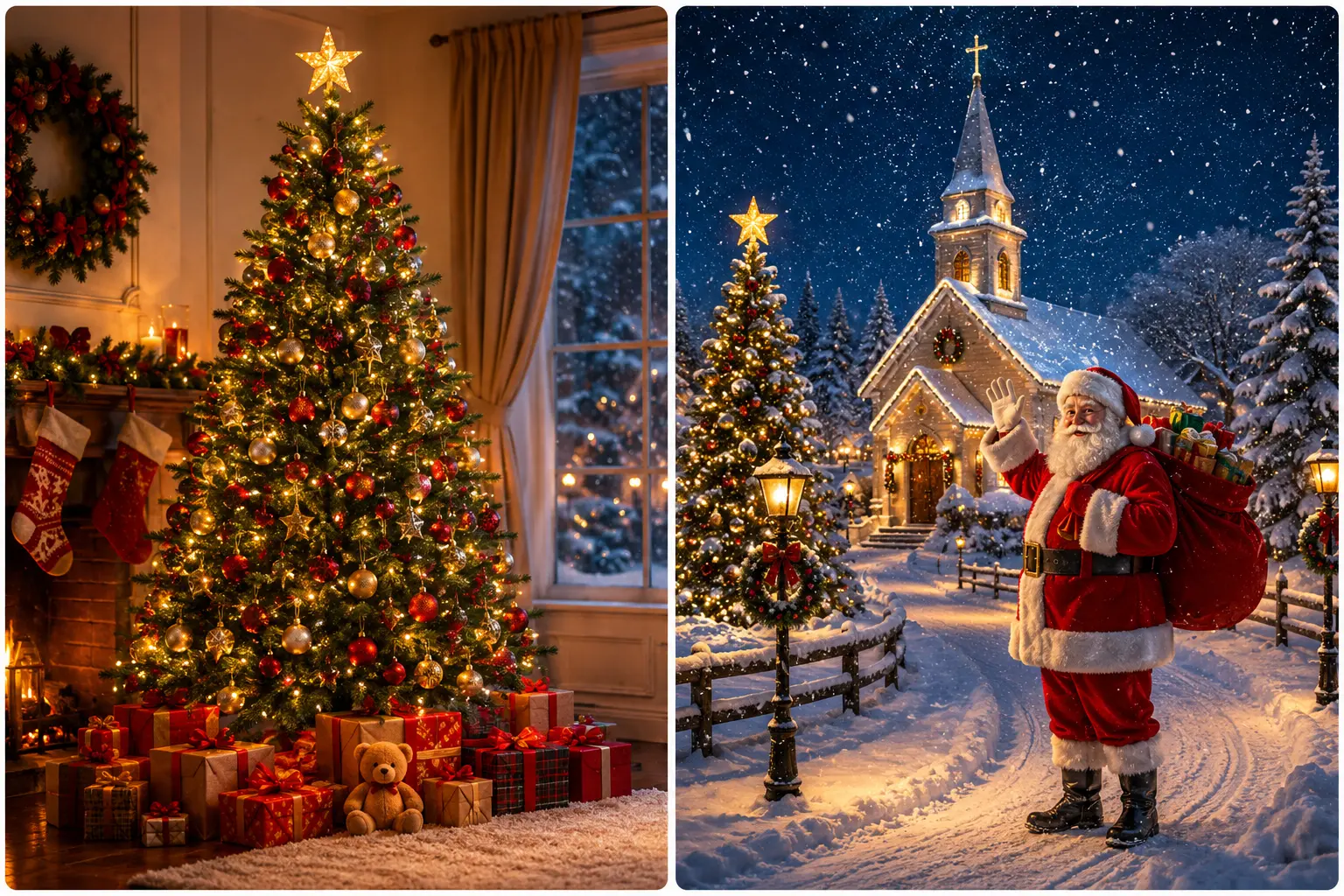
Two of the most universal symbols of Christmas—Santa Claus and the decorated evergreen tree—have fascinating histories that blend ancient folklore, religious history, and 19th-century literature into cherished modern customs.
The History of Santa Claus: The beloved figure of Santa Claus traces back to Saint Nicholas of Myra, a fourth-century Christian bishop who lived in modern-day Turkey. Renowned for his extraordinary generosity and secret gift-giving to the poor, Saint Nicholas became a popular patron saint throughout medieval Europe. Over centuries, European cultures adapted his legend—the Dutch called him Sinterklaas, whose annual feast day in early December involved leaving treats in children's shoes.
When Dutch settlers brought these customs to North America in the 17th and 18th centuries, Sinterklaas evolved into the American name "Santa Claus." The modern image of Santa—a cheerful, white-bearded man in a red suit riding a reindeer-drawn sleigh—was largely shaped in 19th-century New York through Clement Clarke Moore's 1823 poem "A Visit from St. Nicholas" (commonly known as 'Twas the Night Before Christmas) and political cartoonist Thomas Nast's iconic drawings in the 1860s. Today, children worldwide eagerly await Santa's magical journey on Christmas Eve.
Why We Decorate Christmas Trees: Long before the advent of Christianity, evergreen boughs were hung in homes during winter solstice as a reminder that nature would soon reawaken in spring. The tradition of decorating whole evergreen trees as a Christmas symbol developed in 16th-century Germany, where devout Christians brought fir trees into their homes and adorned them with candles, apples, nuts, and paper roses.
Christmas trees were already known in Britain, but Queen Victoria and her German-born husband Prince Albert helped make the custom much more popular in the nineteenth century. In 1848, the Illustrated London News published a famous illustration of the royal family gathered around their decorated tree at Windsor Castle. The charming image encouraged many Victorian families across Britain and North America to adopt the tradition. Today, decorating the tree with twinkling lights, heirloom baubles, and a shining star or angel topper marks the official opening of the holiday season for millions of homes.