Pros and Cons of Buying a Car: Is It Worth It?
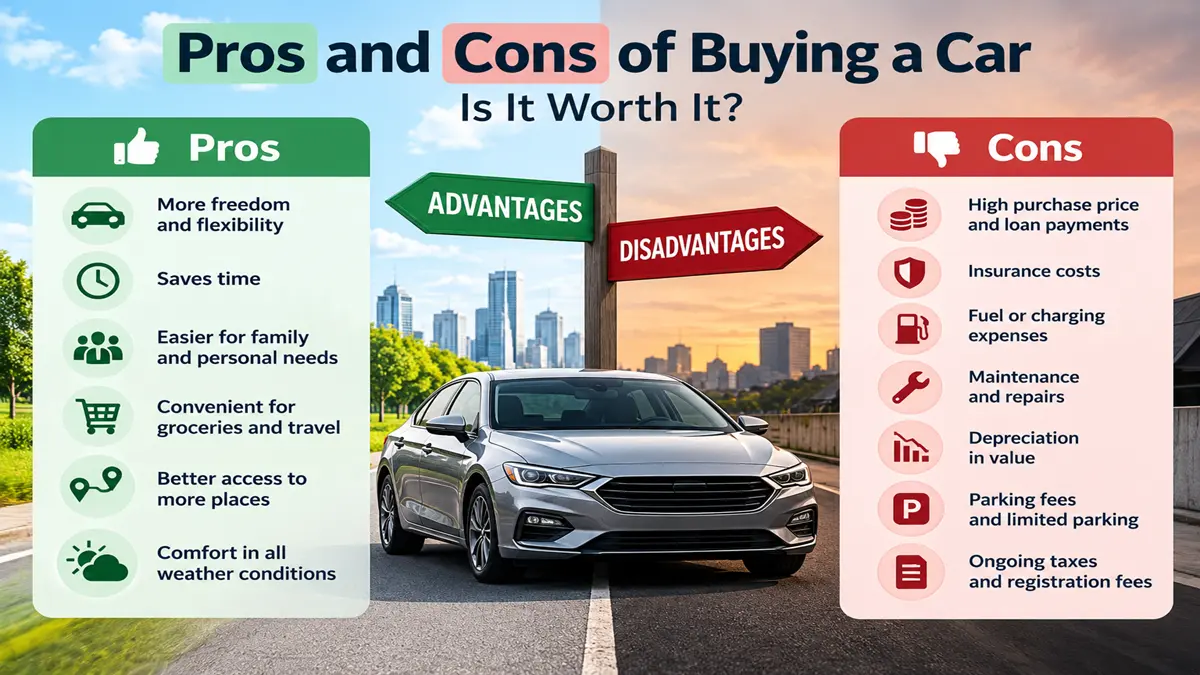
A car can make daily life easier in ways that are hard to appreciate until transportation becomes inconvenient. It can cut a long commute, make grocery runs simpler, help with family responsibilities and remove the need to plan every trip around a bus timetable or ride-hailing app.
That convenience comes at a price, though. Buying a car is not a one-time purchase. It creates an ongoing financial commitment that can last for years.
So, is buying a car worth it? The answer depends less on the car itself and more on how much practical value ownership would add to everyday life.
Benefits of buying and owning a car
For many people, the biggest benefit of owning a car is control over their time.
Public transportation can work extremely well in some cities, but it may involve transfers, waiting periods or limited late-night service. A car allows someone to leave when they want, travel directly to their destination and change plans without checking a schedule.
That flexibility becomes particularly valuable for people who commute regularly, work unusual hours or live in areas where public transport is limited.
Car ownership can also make everyday responsibilities easier. Parents may need to take children to school or activities. Someone may regularly transport groceries, luggage, work equipment or pets. In those situations, a private vehicle can be more practical than repeatedly arranging alternative transportation.
Weather matters too. Walking, cycling or waiting for public transport may be perfectly reasonable most of the year, but extreme heat, cold, rain or snow can change the calculation.
There is also the simple benefit of availability. A car sitting outside the home can be used immediately when an unexpected trip comes up.
Disadvantages of buying a car
The purchase price is only the beginning.
Car owners typically have to budget for insurance, fuel or charging, routine servicing, repairs, registration fees, taxes and sometimes parking. Someone financing a vehicle will also have a monthly payment and interest expense.
Then there is depreciation — the gradual reduction in a vehicle's value as it gets older and accumulates mileage. A car bought for a certain price today may be worth considerably less when it is eventually sold.
Some costs are predictable. Others are not.
A routine service can be planned for. A failed battery, damaged tire or major mechanical repair may arrive without warning. Older vehicles may have lower purchase prices but can require more maintenance, while newer vehicles often cost more upfront and may carry higher insurance premiums.
Parking can also become a serious expense in larger cities. A person who pays for parking at home, at work and during other trips may find that the convenience of ownership costs far more than expected.
This is why looking only at a monthly loan payment can give an incomplete picture of whether buying a car is financially sensible.
Is owning a car worth the cost?
The better question is not simply whether someone can afford a car. It is whether the value received from owning one justifies the total cost.
Consider two people with similar incomes.
One drives to work five days a week, regularly transports family members and lives in an area with limited public transportation. For that person, a car may save hours every week and solve several practical problems.
Another person works from home, lives close to shops and has reliable public transport nearby. A vehicle may spend most of its time parked while insurance, depreciation and other ownership costs continue.
The same car could therefore be highly valuable to one person and an unnecessary expense to another.
Frequency of use is one of the most useful things to examine. Someone considering a purchase can estimate how many trips the car would realistically replace each week and compare that with the cost of existing transportation.
That calculation often reveals more than the price printed on the vehicle.
Alternatives to owning a car
Car ownership is no longer the only practical way to have access to a vehicle.
Depending on where someone lives, alternatives may include public transport, ride-hailing services, taxis, traditional car rentals, car-sharing services, cycling or simply walking for shorter trips.
Occasional drivers can sometimes spend far less by paying for transportation only when they need it.
For example, someone who uses a taxi or ride-hailing service several times a month may feel that each journey is expensive. Yet the annual cost could still be substantially lower than paying for a vehicle, insurance, fuel, maintenance and parking throughout the year.
Renting a car for longer trips can also make sense for people who rarely need one during the working week.
On the other hand, alternatives become less attractive as travel becomes more frequent. Paying for multiple rides every day can quickly add up, while unreliable transport can carry a cost of its own in lost time and inconvenience.
When buying a car can provide real value
Car ownership tends to make more sense when the vehicle would solve a recurring transportation problem rather than an occasional inconvenience.
Someone with a long or difficult commute may gain significant time each week. A household with children, elderly relatives or frequent passenger needs may place a high value on having transportation immediately available.
Location matters as well. In areas designed around driving, basic tasks such as shopping, medical appointments or commuting may be difficult without a vehicle.
Financial readiness still matters. A useful car can become a source of stress if its payments and running costs leave little room for savings, emergencies or other priorities.
Buying a car because it genuinely improves daily life is very different from buying one simply because ownership feels like the expected next step.
Is buying a car worth it?
There is no universal financial rule that makes car ownership worthwhile for everyone.
For some people, the time saved, flexibility gained and practical problems solved can easily justify the cost. For others, the same vehicle may become an expensive asset that spends most of its life parked.
The useful comparison is between the full cost of ownership and the actual value the car would provide.
Before buying, it helps to look beyond the excitement of choosing a vehicle and examine how ownership would fit into everyday life.
Still unsure whether buying a car makes sense?
General pros and cons can explain the trade-offs, but they cannot account for an individual's transportation needs, lifestyle, financial readiness and available alternatives.
Toolsyte's Should I Buy a Car? assessment asks 14 practical questions and provides a personalized Car Ownership Fit Score based on those factors.